



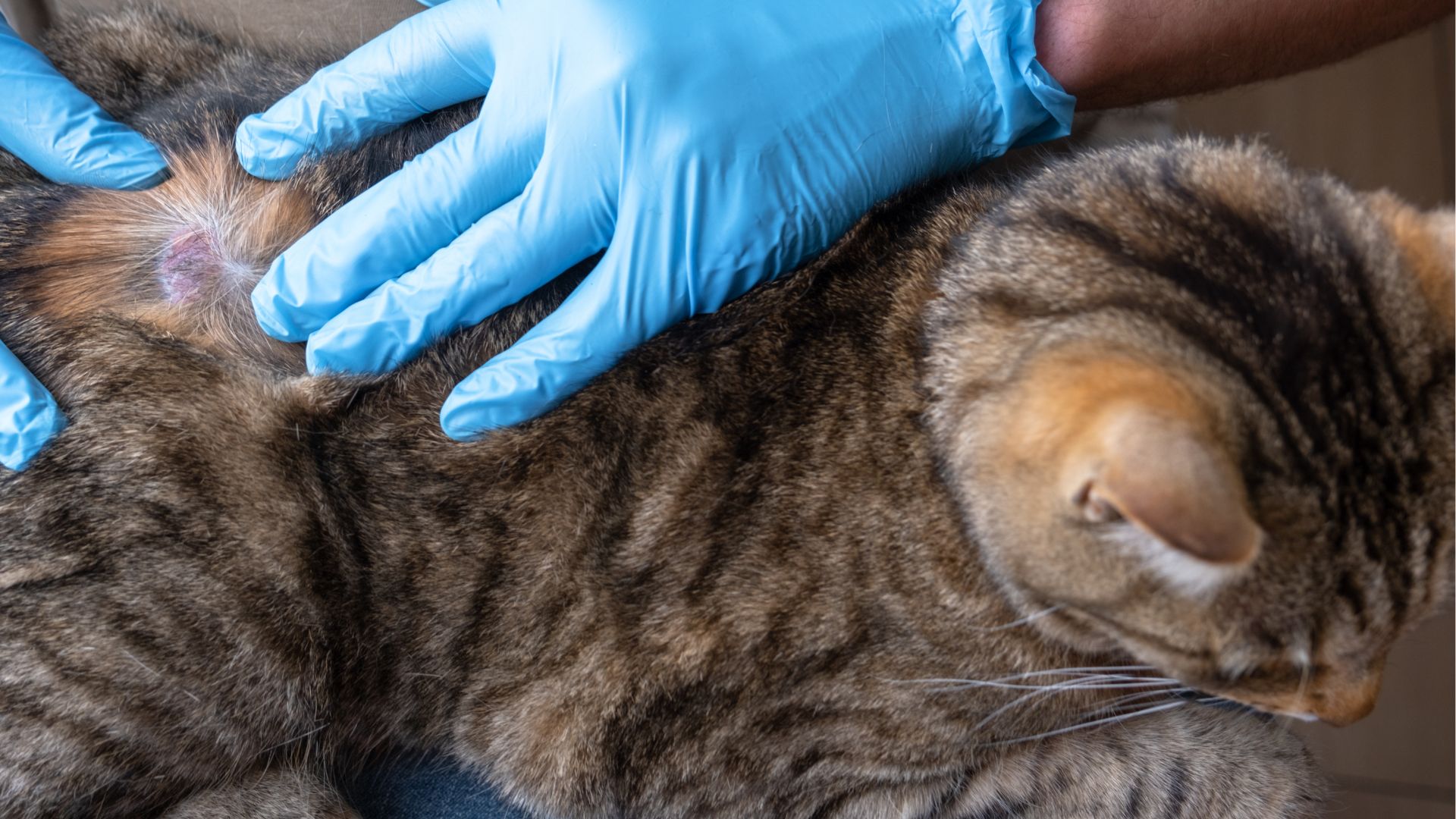
What does ringworm look like in pets: Early signs you should not ignore
What is ringworm?
Ringworm which is known as fungal skin infection in pets often shows up as small, circular patches of hair loss, with red, scaly or sometimes crusty skin. You’ll commonly notice it around the face, ears, paws, or body, and it tends to spread quite quickly if left untreated especially in kittens and puppies.
Despite the name, ringworm isn’t a worm but a fungal infection that affects the skin, hair, and even nails. It can pass easily between pets and, in some cases, to humans too. That’s why early veterinary care matters. Getting it checked and treated early helps control the infection before it spreads further or becomes harder to manage.
Common symptoms of ringworm in pets
- Patchy hair loss (often circular)
- Redness or inflammation
- Dry, scaly or flaky skin
- Crusting or mild wounds
- Mild itching (not always severe)
How fungal skin infection looks in cats
- Often subtle or hidden
- Small patches on ears, face and paws
- May carry infection with minimal signs
How fungal skin infection looks in dogs
- More visible lesions
- Circular bald patches on body or limbs
- Skin may appear red and inflamed
Why does it matter?
Benny, a young kitten, came in with an early-stage fungal infection, showing small circular hair loss on his ears. The infection was still localised, so treatment was started early, and with prompt care and monitoring, it was controlled before it could spread to other pets in the household.
How does ringworm spread?
- Direct contact with infected pets, people or other animals.
- Exposure in grooming or boarding facilities
- Contact with contaminated surfaces (furniture, carpets and floors)
- Sharing or touching infected bedding
On the other hand, humans can get skin fungus through infected pets or contaminated items. Children, the elderly, and those with weaker immune systems are more at risk, while healthy adults are less affected unless they have broken skin.
When to see vet
- Hair loss is spreading or getting worse
- Multiple patches appear on the body
- Skin becomes red, inflamed, or crusted
- Your pet keeps scratching or licking the area
- Other pets or humans start showing similar signs
- No improvement after a few days
How is ringworm diagnosed in pets?
Ringworm cannot be confirmed by appearance alone, as it can look similar to other skin conditions. A veterinary assessment is important to ensure an accurate diagnosis and the right treatment plan such as a wood’s lamp, fungal culture and also (PCR (Polymerase Chain Reaction).
At Starlight Veterinary Hospital, our experienced doctors are trained to recognise different skin conditions and distinguish fungal infection from other similar issues. Through careful clinical examination and the use of appropriate diagnostic tools, they are able to identify the underlying cause and guide the right treatment early.
How is ringworm treated in pets?
At Starlight Veterinary Hospital, we commonly manage ringworm cases ranging from mild localised infections to more widespread conditions requiring combined treatment. Treatment depends on severity and may include:
1. Topical antifungal treatment
Used for mild cases or alongside oral medication:
- Medicated shampoos
- Antifungal creams or wipes
- Lime sulfur dips
These help eliminate fungal spores on the skin and reduce spread.
2. Oral antifungal medication
For more extensive infections, vets may prescribe medications such as itraconazole, griseofulvin, or terbinafine.
These work from within to stop fungal growth and must be given as directed.
3. Environmental cleaning
Ringworm spores can survive for long periods, so thorough cleaning is important:
- Wash bedding in hot water
- Vacuum carpets regularly
- Disinfect surfaces with appropriate cleaners
- Clean grooming tools and toys
- Keep infected pets in easy-to-clean areas
4. Monitoring and follow-up
Follow-up checks may be needed to ensure the infection has cleared. Stopping treatment too early can lead to recurrence.
How to prevent ringworm from spreading at home?
Ringworm can spread easily to other pets and humans, so limiting contact is important. Avoid direct handling, isolate the infected pet and wash your hands after contact.
Clean your home thoroughly to reduce spread. Wash fabrics, vacuum surfaces and disinfect items like toys, brushes and bedding with appropriate cleaning solutions.
Although ringworm may resolve on its own over time, it can take months and continue spreading. Early veterinary treatment helps speed up recovery and prevents further infection.
If you notice early signs of ringworm, do not wait for it to spread.
Visit Starlight Veterinary Hospital for an assessment and book your appointment via Pet Universe App to reduce waiting time
FAQ
1. Can ringworm go away on its own in pets?
It can resolve on its own, but it may take months and can continue spreading to other pets and humans. Hence, early treatment is recommended to control the infection faster.
2. How long does ringworm treatment typically take?
Most cases take a few weeks to several months depending on severity. Treatment should continue until the infection has cleared.
3. Is ringworm dangerous for pets?
Ringworm is not life-threatening, but it is highly contagious and can spread quickly if left untreated.
4. Can humans get ringworm from pets?
Yes, ringworm can spread to humans through direct contact or contaminated items especially those with weaker immune systems.
5. Do I need to clean my home if my pet has ringworm?
Yes, cleaning is essential to remove fungal spores and prevent reinfection.