




What Toxic Plants Are Dangerous for Cats and Dogs? 6 Signs You Should Not Ignore
Certain common household and garden toxic plants can be harmful to cats and dogs, causing symptoms that range from mild vomiting to life-threatening organ damage. Even small exposure to these toxic plants can be dangerous, especially with plants like lilies or sago palm, making early veterinary care critical to prevent serious complications.
Plant Toxicity in Pets: How Toxic Plants Affect Cats and Dogs
Plant toxicity happens when a pet chews, ingests, or comes into contact with a plant that contains harmful substances.
These toxins can affect different parts of the body from the digestive system to the nervous system and even vital organs like the kidneys or liver.
A real-life case: When a common toxic plants turned fatal
A recent case reported in the UK highlights how serious plant toxicity can be. A healthy dog named Bobby became critically ill and died just hours after visiting a tulip festival, where he was believed to have been exposed to toxic tulips.
Tulips, especially their bulbs, are known to be toxic to dogs and can cause symptoms such as vomiting, drooling, breathing difficulties, and in severe cases, death.
What makes this case important is how fast the condition progressed — within just a few hours.
Which Toxic Plants Are Poisonous to Cats and Dogs?
For more info click here!
Some of the most common toxic plants seen in households include:
- Lily – highly toxic to cats, can cause kidney failure
- Aloe vera – may cause vomiting and diarrhoea
- Monstera – leads to oral irritation and drooling
- Dumb cane (Dieffenbachia) – causes swelling, pain, difficulty swallowing
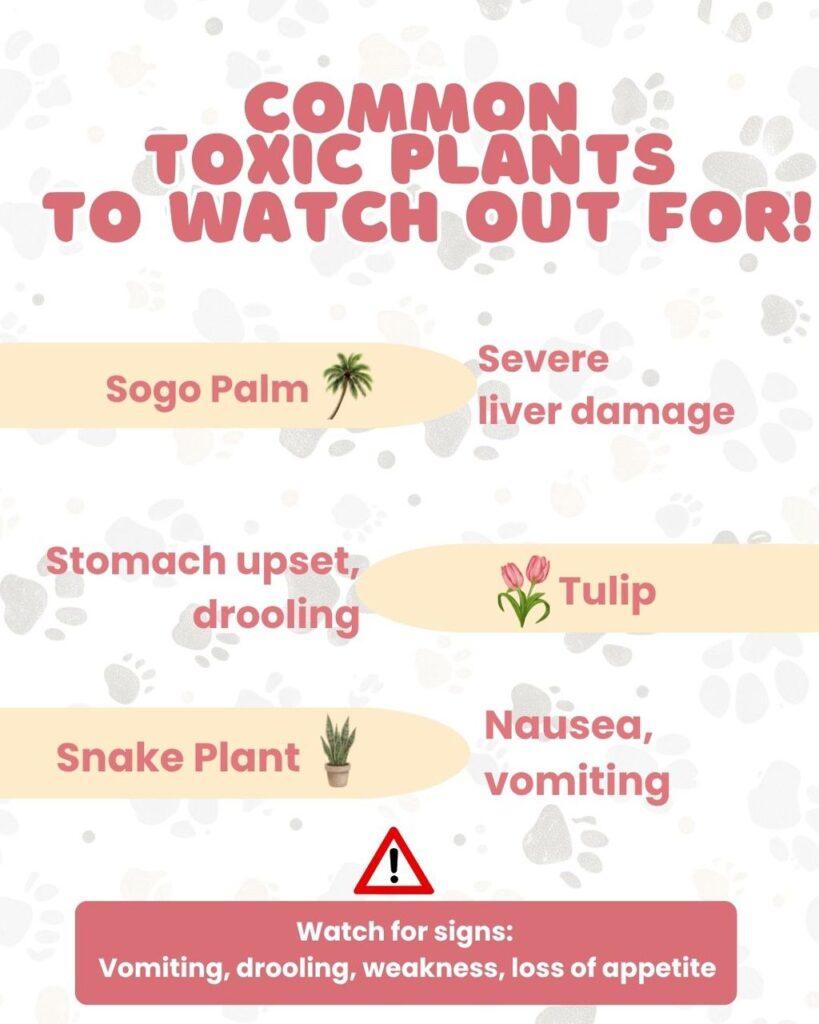
- Sago palm – extremely toxic, can cause severe liver damage
- Tulip – may trigger stomach upset and drooling
- Snake plant – can cause nausea and vomiting
Even small bites can trigger reactions, depending on the plant and the amount ingested.
What are the signs of plant poisoning in pets?
Symptoms can vary depending on the toxin, but common signs include:
- Vomiting or diarrhoea
- Excessive drooling
- Loss of appetite
- Lethargy or weakness
- Swelling of the mouth or difficulty swallowing
- Tremors or seizures (in severe cases)
How fast do symptoms appear?
Signs of plant poisoning can appear immediately or within a few hours after exposure.
Some toxins act quickly on the digestive system, while others may take time to affect internal organs, making early observation extremely important.
Why is plant poisoning time-sensitive?
Plant poisoning is not always obvious at the start. What may look like mild vomiting can progress into severe dehydration, organ damage, or neurological symptoms within hours.
Certain plants, such as lilies and sago palm, can cause irreversible damage even with small exposure, making early intervention critical for survival.
What should I do if my pet eats a toxic plant?
If you suspect your pet has eaten a toxic plant:
- Remove any remaining plant material from their mouth and surrounding area
- Prevent further access to the plant
- Do not wait for symptoms to worsen
- Contact your veterinarian immediately
Acting early can significantly reduce the severity of poisoning.
How do vets treat plant poisoning?
Treatment depends on the type of toxin and how early the pet is brought in.
Veterinary care may include:
- Rapid decontamination – inducing vomiting and administering activated charcoal to bind toxins
- IV fluids – to support hydration and maintain blood pressure
- Symptomatic treatment – managing vomiting, diarrhoea, or seizures
- Monitoring – to assess organ function and recovery
At Starlight Veterinary Hospital, every case is carefully assessed based on its severity to ensure pets receive prompt and appropriate care. We also provide 24-hour emergency services, so your pet can receive immediate attention at any time of day or night. In an emergency, please do not hesitate to contact us or your nearest emergency veterinary clinic right away.
How can I keep my pets safe from toxic plants?
Prevention plays a key role in avoiding emergencies:
- Identify and remove toxic plants from your home
- Keep plants out of reach using shelves or hanging planters
- Supervise pets, especially curious kittens and puppies
- Replace toxic plants with safer alternatives like roses or other plants
A simple change in your environment can prevent serious health risks.
When should you see a vet?
If your pet shows any unusual symptoms after exposure to plants, or if you are unsure what they have ingested, it is safer to have them checked early.
Early treatment can prevent minor symptoms from becoming a critical emergency.
Frequently Asked Questions (FAQ)
Can a small bite of a toxic plant harm my pet?
Yes. Some plants, like lilies and sago palm, can cause severe poisoning even in small amounts.
How long does plant poisoning take to show symptoms?
Symptoms may appear immediately or within a few hours, depending on the toxin.
Should I wait and monitor my pet at home?
Delaying treatment can increase the risk of complications. It’s best to seek veterinary advice as soon as possible.
Can pets recover from plant poisoning?
Recovery depends on the type of plant, amount ingested, and how early treatment is given. Early intervention improves outcomes significantly