




Diabetes in Dogs: A Complete Guide to Early Signs & 5 Effective Treatments
Diabetes in dogs is a long-term hormonal condition that prevents the body from regulating blood sugar effectively. Without enough insulin, glucose remains in the bloodstream instead of being used as energy, leading to persistently high blood sugar. Although diabetes cannot usually be cured, early diagnosis and consistent treatment allow many dogs to enjoy a healthy and active life.
Key Takeaways
- Diabetes in dogs is a lifelong condition that affects blood sugar regulation.
- Early warning signs include excessive thirst, frequent urination, increased appetite, and unexplained weight loss.
- Most diabetic dogs require lifelong insulin therapy and regular veterinary monitoring.
- Prompt treatment helps reduce the risk of serious complications and improves quality of life.
- A consistent routine involving diet, exercise, and medication plays an important role in long-term management.
Quick Facts About Diabetes in Dogs
| Topic | Information |
| Medical Name | Diabetes Mellitus |
| Most Common Age | 7–10 years |
| Curable? | No |
| Treatable? | Yes |
| Main Treatment | Insulin injections |
| Emergency? | Yes, if complications develop |
What Is Diabetes in Dogs?
Diabetes in dogs develops when the body is unable to produce enough insulin or use it effectively. Insulin is a hormone made by the pancreas that helps move glucose from the bloodstream into the body’s cells, where it is converted into energy.
When insulin is lacking, glucose cannot enter the cells and instead accumulates in the bloodstream. Although blood sugar levels become abnormally high, the body’s tissues are unable to access the energy they need. Over time, this imbalance can affect multiple organs and lead to serious health problems if left untreated.
What Types of Diabetes Can Dogs Develop?
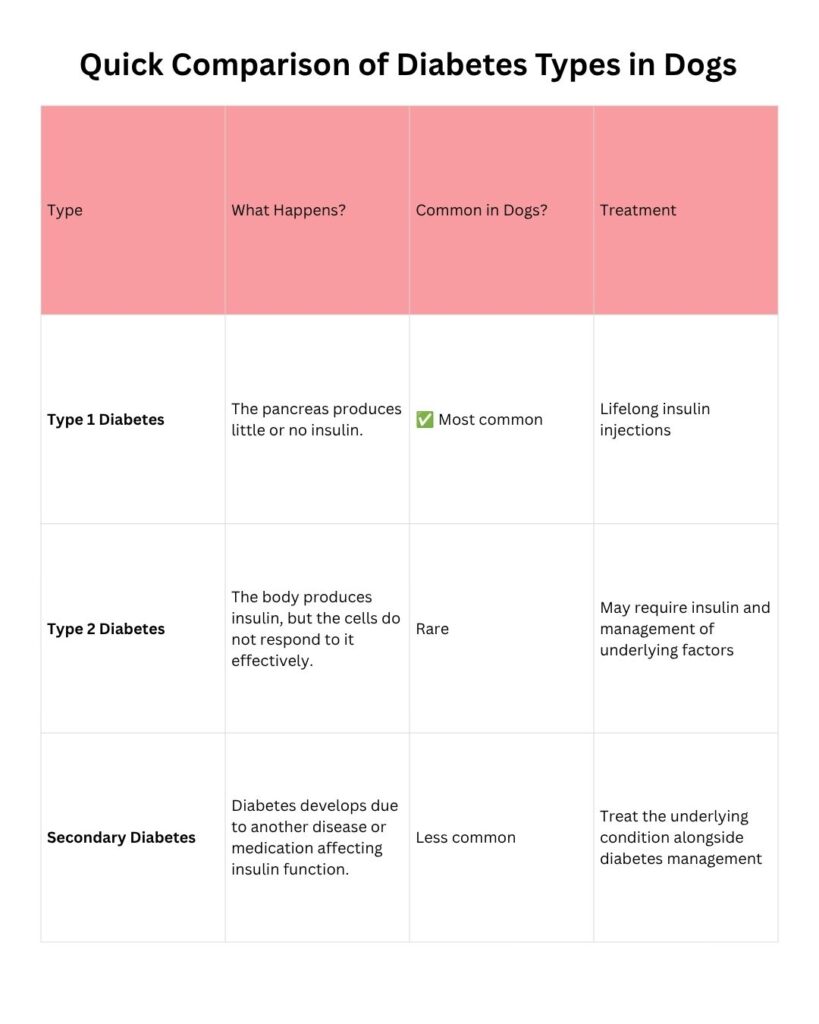
Although diabetes is often discussed as a single disease, there are different forms of diabetes that can affect dogs. Understanding these types can help owners better understand why the condition develops and why treatment may vary from one dog to another.
Type 1 Diabetes (Insulin-Dependent Diabetes)
Type 1 diabetes is the most common form of diabetes in dogs. It develops when the pancreas is no longer able to produce enough insulin to regulate blood sugar levels. This usually happens because the insulin-producing cells in the pancreas have been permanently damaged or destroyed.
Since the body cannot make enough insulin on its own, dogs with Type 1 diabetes require lifelong insulin injections to control their blood sugar. Without treatment, glucose continues to build up in the bloodstream, increasing the risk of serious health complications.
What It Means
Most dogs diagnosed with diabetes have Type 1 diabetes. This means insulin therapy is usually a lifelong commitment, but with proper management, many dogs can continue to live happy and active lives.
Type 2 Diabetes (Non-Insulin-Dependent Diabetes)
Type 2 diabetes occurs when the body still produces insulin, but the cells do not respond to it effectively. This problem is known as insulin resistance.
Unlike people, Type 2 diabetes is uncommon in dogs and is seen much more frequently in cats. In the rare cases where it occurs, it is often associated with obesity or certain hormonal disorders that interfere with the body’s ability to use insulin properly.
Even though the pancreas may still produce some insulin, many dogs with Type 2 diabetes eventually require insulin treatment if blood sugar levels cannot be controlled through other means.
What It Means
While Type 2 diabetes is the most common form of diabetes in humans, it is relatively rare in dogs. Most diabetic dogs will instead develop Type 1 diabetes and need lifelong insulin therapy.
Secondary Diabetes
Secondary diabetes develops when another medical condition or certain medications interfere with normal insulin production or make the body less responsive to insulin. Rather than being a primary disease of the pancreas, it occurs as a consequence of another underlying problem.
Conditions that may contribute to secondary diabetes include:
- Chronic pancreatitis
- Cushing’s disease (hyperadrenocorticism)
- Hormonal changes in unspayed female dogs
- Long-term corticosteroid medication
- Obesity, which can worsen insulin resistance
Managing secondary diabetes often involves treating both the diabetes and the underlying condition. In some cases, improving or controlling the primary disease may make diabetes easier to manage, although many dogs will still require ongoing insulin therapy.
What It Means
Some dogs develop diabetes because another health problem affects how their body produces or responds to insulin. Identifying and treating the underlying condition is an important part of long-term diabetes management.
Why Is Diabetes in Dogs Time-Sensitive?
Diabetes is a progressive disease that can worsen without timely treatment. Persistently high blood sugar places stress on many organs and increases the risk of developing additional health problems.
As the disease progresses, dogs may develop cataracts, urinary tract infections, dehydration, and a potentially life-threatening condition known as diabetic ketoacidosis (DKA). Early diagnosis allows treatment to begin before these complications become more difficult to manage.
What Causes Diabetes in Dogs?
Several factors may contribute to the development of diabetes in dogs. In many cases, the insulin-producing cells within the pancreas become damaged, preventing the body from making enough insulin.
Other factors that may increase the risk include:
- Chronic pancreatitis
- Obesity
- Certain hormonal disorders
- Long-term use of steroid medications
- Genetic predisposition
- Intact female dogs, particularly during hormonal changes
In some dogs, no single cause can be identified, and multiple factors may contribute to the disease.
Which Dogs Are More Likely to Develop Diabetes?
Although diabetes can affect any dog, some are more likely to develop the condition than others.
| Risk Factor | Higher Risk |
| Age | Middle-aged to senior dogs (approximately 7–10 years) |
| Sex | Female dogs |
| Body Condition | Overweight or obese dogs |
| Breed | Miniature Schnauzers, Poodles, Dachshunds, Beagles, Samoyeds, Cairn Terriers |
While these factors increase the likelihood of diabetes, the disease can still occur in dogs outside these groups.
What Are the Signs of Diabetes in Dogs?
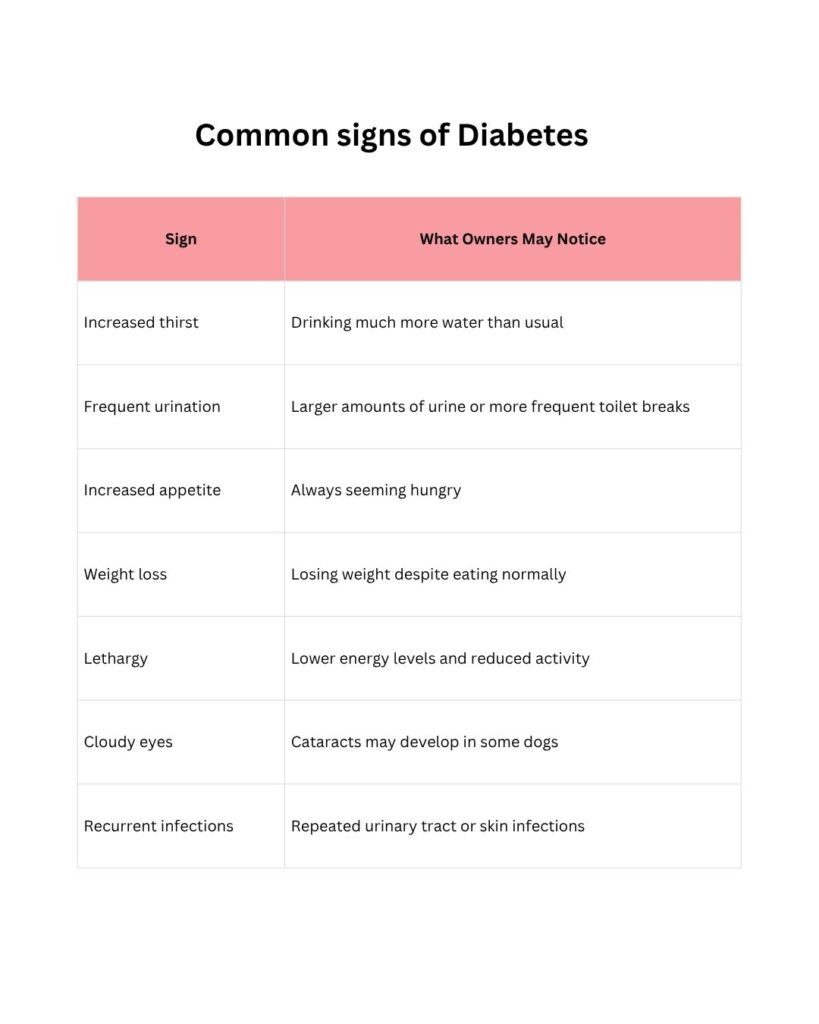
The signs of diabetes often develop gradually and may initially appear subtle. Many owners first notice changes in their dog’s drinking or urination habits before other symptoms become obvious.
How Do Veterinarians Diagnose Diabetes in Dogs?
Diagnosing diabetes involves more than identifying clinical signs. Your veterinarian will perform several tests to confirm the condition and rule out other illnesses that may cause similar symptoms.
These tests may include:
- A complete physical examination
- Blood tests to measure glucose levels
- Urinalysis to detect glucose or ketones
- Blood chemistry testing to assess overall health
- Fructosamine testing to evaluate long-term blood sugar control when needed
Combining these results allows veterinarians to make an accurate diagnosis and recommend the most appropriate treatment plan.
How Is Diabetes in Dogs Treated?
Although diabetes cannot usually be cured, it can often be managed successfully with a combination of medication and lifestyle adjustments.
Treatment commonly includes:
- Daily insulin injections
- A veterinarian-recommended diet
- Maintaining a healthy body weight
- Consistent daily exercise
- Regular blood glucose monitoring
- Routine veterinary check-ups to assess treatment response
Maintaining a consistent feeding schedule, exercise routine, and insulin administration time helps keep blood sugar levels more stable over the long term.
Treatment Summary

| Treatment | Purpose |
| Insulin | Controls blood glucose |
| Special diet | Maintains stable blood sugar |
| Exercise | Supports metabolism |
| Monitoring | Tracks treatment response |
| Follow-up visits | Adjusts insulin and detects complications |
Can Dogs Live a Normal Life With Diabetes?
Yes. Many diabetic dogs continue to enjoy a good quality of life for years after diagnosis when their condition is well managed.
Successful long-term management depends on consistency. Following the prescribed insulin schedule, feeding a balanced diet, maintaining regular exercise, and attending routine veterinary appointments all help support stable blood sugar levels and reduce the risk of complications.
Living With a Diabetic Dog
This is a great owner-focused section.
Include:
- Establishing a daily routine
- Giving insulin consistently
- Feeding at the same time every day
- Monitoring water intake and appetite
- Watching for changes in energy levels
- Keeping follow-up appointments
What Happens If Diabetes Is Left Untreated?
Without treatment, diabetes can progress to serious and potentially life-threatening complications.
These may include:
- Cataracts that can impair vision
- Recurrent urinary tract infections
- Severe dehydration
- Muscle loss and weakness
- Diabetic ketoacidosis (DKA)
- Organ dysfunction
- Coma or death in advanced cases
Seeking veterinary care as soon as symptoms appear offers the best chance of preventing these complications.
Arrange a veterinary appointment promptly if your dog:
When Should You Visit a Veterinarian?
- Is drinking significantly more water than usual.
- Is urinating more frequently or having accidents indoors.
- Continues to lose weight despite eating well.
- Appears unusually tired or weak.
- Develops cloudy eyes.
- Experiences repeated urinary tract infections.
- Vomits, refuses food, or suddenly collapses, as these may indicate a medical emergency requiring immediate treatment.
How We Diagnose and Manage Diabetes at Starlight Veterinary Hospital
At Starlight Veterinary Hospital, dogs suspected of having diabetes undergo a comprehensive assessment to determine the underlying cause of their symptoms and evaluate their overall health.
Our diagnostic approach may include blood testing, urinalysis, blood glucose monitoring, and other investigations when needed. For dogs that are critically ill or experiencing complications such as diabetic ketoacidosis, intensive care and hospitalisation may be required to stabilise their condition before beginning long-term diabetes management.
Once diagnosed, we develop an individualised treatment plan that may include insulin therapy, nutritional guidance, routine monitoring, and scheduled follow-up visits to help maintain stable blood sugar levels and support your dog’s long-term wellbeing.
FAQ
No. Diabetes in dogs is generally considered a lifelong condition that cannot be cured. However, with daily insulin therapy, a suitable diet, regular exercise, and routine veterinary monitoring, many diabetic dogs can live happy and fulfilling lives.
Diabetes itself is not considered a painful disease. However, if blood sugar levels remain uncontrolled, dogs can develop complications that may cause discomfort or illness. For example, urinary tract infections, cataracts, pancreatitis, or diabetic ketoacidosis (DKA) can affect your dog’s health and wellbeing. Some dogs may also appear weaker or less active if their diabetes is poorly controlled. With early diagnosis, appropriate treatment, and regular monitoring, many of these complications can be prevented or managed before they become severe.
Although diabetes is much more common in middle-aged and senior dogs, puppies and young dogs can occasionally develop the disease. Diabetes in younger dogs may be linked to congenital conditions, pancreatic disorders, or other underlying health issues. Because diabetes is relatively uncommon in puppies, symptoms such as excessive thirst, increased urination, or poor growth should always be evaluated by a veterinarian. Early diagnosis allows treatment to begin promptly and helps support healthy growth and long-term wellbeing.
The frequency of blood sugar monitoring varies depending on how well your dog’s diabetes is controlled. Newly diagnosed dogs often require more frequent testing while insulin doses are being adjusted. Once blood sugar levels become stable, your veterinarian may recommend periodic blood glucose curves, fructosamine testing, or routine examinations to monitor your dog’s progress. Regular monitoring helps ensure that treatment remains effective and allows adjustments to be made if your dog’s needs change over time.
A diabetes diagnosis does not necessarily mean your dog will have a shorter life. Many diabetic dogs live happily for several years after diagnosis when their condition is properly managed. Factors such as early detection, consistent insulin therapy, a healthy body weight, and regular veterinary care all contribute to a better long-term outlook. Dogs that develop serious complications or receive delayed treatment may face greater health challenges, which is why routine monitoring and prompt veterinary attention remain so important.
Yes. Physical stress, illness, surgery, or infections can influence blood sugar levels and make diabetes more difficult to control. Keeping your dog healthy and attending regular veterinary check-ups can help minimise these effects.
Genetics may increase a dog’s risk of developing diabetes, particularly in certain breeds. However, diabetes usually develops due to a combination of genetic, hormonal, and environmental factors rather than inheritance alone.
Yes. Dogs with diabetes have a higher risk of developing cataracts, which can lead to vision loss if left untreated. Regular eye examinations are recommended, especially if your dog has been diagnosed with diabetes.
Yes. Persistently high blood sugar can affect several organs over time, including the kidneys, liver, eyes, and urinary system. Proper diabetes management helps reduce the risk of these long-term complications.
Yes. Regular, moderate exercise is beneficial for dogs with diabetes because it supports overall health and helps maintain a healthy body weight. However, exercise should be consistent from day to day, and any major changes to your dog’s activity level should be discussed with your veterinarian.