



Cat Weight Guide: Is Your Cat Underweight, Healthy or Overweight?
A healthy cat weight is one of the most important indicators of your cat’s overall wellbeing. Changes in body weight may be one of the earliest signs of nutritional imbalance, underlying illness, or lifestyle-related health problems. Monitoring your cat’s weight regularly can help identify potential issues before they become more serious.
What It Means
Your cat’s weight isn’t just a number on the scale. It provides valuable insight into their overall health, helping veterinarians detect medical conditions earlier and recommend appropriate nutrition throughout every stage of life.
Cats are known for hiding signs of illness. If your cat has gained or lost weight unexpectedly, early veterinary assessment may help identify the cause before more obvious symptoms develop.
What Is The Ideal Cat Weight?
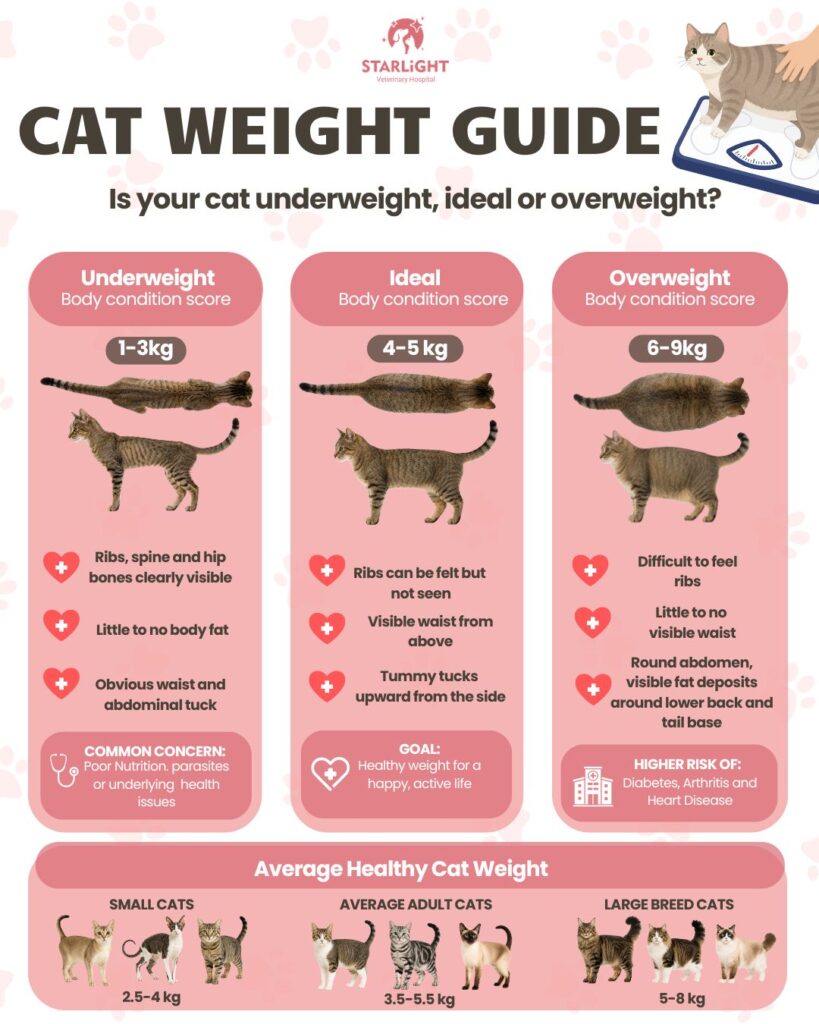
There isn’t a single ideal weight that applies to every cat. A healthy cat’s weight depends on its breed, age, sex, body frame, and muscle mass, which is why veterinarians assess both body weight and Body Condition Score (BCS) to determine whether a cat is underweight, at an ideal weight, or overweight.
| Cat Size | Ideal Weight |
| Small cats | 2.5–4 kg |
| Medium cats | 3.5–5.5 kg |
| Large cats | 5–8 kg |
Healthy Cat Weight by Popular Breed
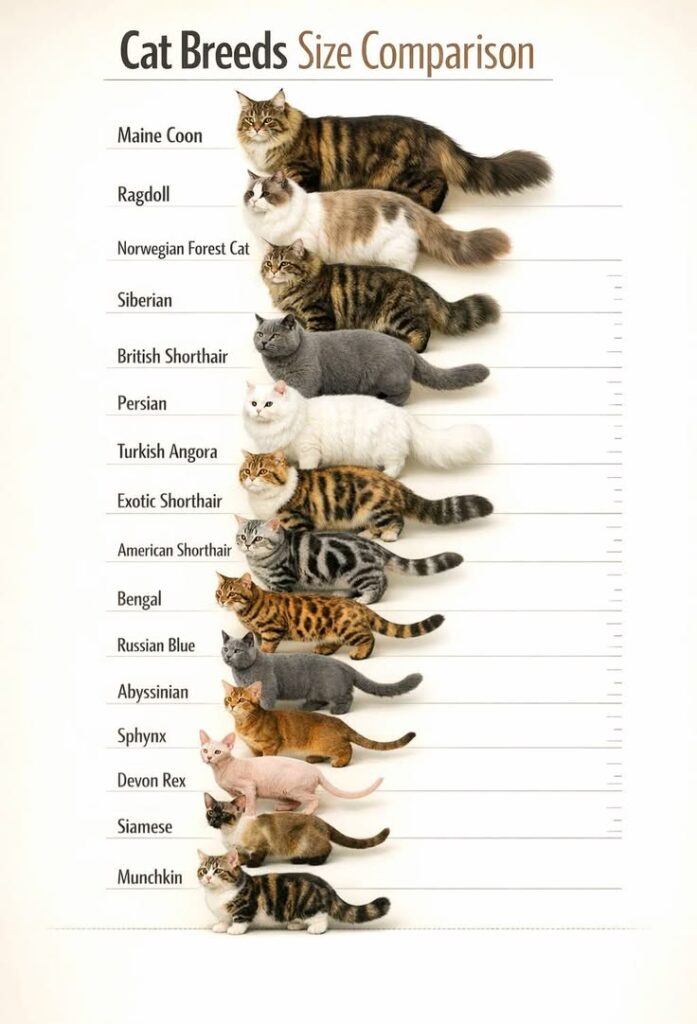
| Breed | Healthy Weight |
| Domestic Shorthair | 3–5.5 kg |
| Domestic Longhair | 3.5–5.5 kg |
| Siamese | 2.5–4.5 kg |
| Persian | 3–5.5 kg |
| British Shorthair | 4–7 kg |
| Maine Coon | 5–9 kg |
| Ragdoll | 4–9 kg |
| Bengal | 3.5–7 kg |
| Scottish Fold | 2.7–6 kg |
| Sphynx | 3–6 kg |
Healthy Kitten Weight by Age
| Kitten Age | Average Weight |
| Birth | 80–120 g |
| 2 weeks | 200–300 g |
| 4 weeks | 350–500 g |
| 6 weeks | 500–900 g |
| 8 weeks | 800 g–1 kg |
| 3 months | 1.2–1.8 kg |
| 4 months | 1.8–2.5 kg |
| 5 months | 2.3–3 kg |
| 6 months | 2.5–3.5 kg |
| 12 months | Close to adult weight |
Healthy Cat Weight by Life Stage
| Life Stage | Healthy Weight Guidance |
| Kitten | Weight should increase steadily during growth. |
| Adult | Weight should remain stable with an ideal Body Condition Score. |
| Senior (7+ years) | Mild weight loss may occur, but sudden changes should always be investigated. |
Why Does Body Condition Score Matter More Than Weight?
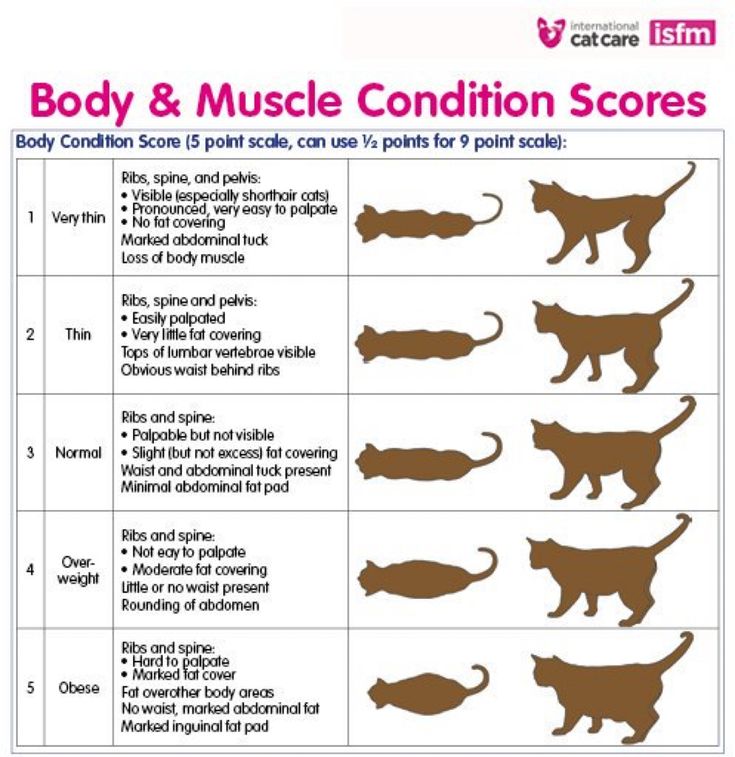
Although many owners focus on kilograms, veterinarians assess much more than body weight alone. A cat’s Body Condition Score (BCS) evaluates body fat by examining the ribs, waistline, abdomen, and overall body shape, providing a more accurate picture of whether a cat is underweight, ideal, or overweight.
Veterinarians also assess Muscle Condition Score (MCS), which evaluates muscle mass separately from body fat. This is important because some cats may appear overweight while still experiencing muscle loss, particularly senior cats or those with chronic illnesses.
Two cats weighing exactly 4 kg may not have the same body condition. One may be fit and healthy, while the other may carry excess body fat or have reduced muscle mass.
How Can You Tell If Your Cat Is Underweight?
Being underweight does not always mean your cat isn’t eating enough. Weight loss may occur because of nutritional deficiencies, dental disease, parasites, digestive disorders, or medical conditions that affect nutrient absorption or increase calorie requirements. A veterinary examination is often needed to determine the underlying cause.
How Can You Tell If Your Cat Is Overweight?
Weight gain usually develops gradually, making it difficult for owners to notice until obesity becomes obvious. Regular weight checks and body condition assessments can identify unhealthy weight gain earlier, allowing appropriate dietary and lifestyle changes before obesity affects your cat’s health.
What Factors Affect Your Cat’s Weight?
Many factors influence whether a cat maintains a healthy weight. These include breed, age, activity level, neuter status, feeding habits, diet quality, and underlying medical conditions. Understanding these factors helps explain why two cats of similar size may have very different nutritional needs.
Why Can Cats Become Overweight?
Obesity usually develops because calorie intake consistently exceeds the calories your cat uses each day. Free feeding, excessive treats, table scraps, reduced activity, and not adjusting food portions after neutering are among the most common contributing factors.
Treats and snacks should only make up a small proportion of your cat’s daily calorie intake, as excessive extras can contribute to gradual weight gain over time.
Why Can Cats Lose Weight?
Weight loss can occur when a cat consumes fewer calories than it needs or when an underlying disease affects nutrient absorption, metabolism, or appetite. If your cat continues losing weight despite eating normally, veterinary assessment is recommended to identify the underlying cause.
What Health Problems Are Linked to Obesity?
Carrying excess body fat places additional strain on your cat’s joints, organs, and metabolism. Overweight cats have a higher risk of developing conditions such as diabetes mellitus, arthritis, and reduced mobility, all of which can affect their quality of life.
Maintaining a healthy body condition is about more than appearance. It plays an important role in helping your cat stay active, comfortable, and healthy throughout its life.
How Can You Help Your Cat Maintain a Healthy Weight?
Maintaining a healthy weight requires more than simply feeding less food. Portion control, balanced nutrition, regular activity, environmental enrichment, and routine weight monitoring all contribute to long-term weight management. Consistency is far more effective than making sudden dietary changes.
Tips
- Measure food portions accurately.
- Avoid excessive treats.
- Encourage daily play.
- Use puzzle feeders if appropriate.
- Monitor your cat’s weight every month.
Should You Change Your Cat’s Food After Neutering?
After neutering or spaying, many cats require fewer calories because their energy needs decrease. Without adjusting food intake or increasing activity, gradual weight gain can occur. Your veterinarian can recommend an appropriate feeding plan based on your cat’s ideal body condition rather than body weight alone.
When Should You Visit a Veterinarian?
Unexpected weight gain or weight loss should never be ignored. If your cat’s Body Condition Score changes, muscle loss develops, or weight changes occur without an obvious reason, a veterinary examination can help identify any underlying medical or nutritional concerns before they become more serious.
How We Assess Your Cat’s Weight at Starlight Veterinary Hospital
At Starlight Veterinary Hospital, assessing your cat’s weight involves much more than stepping onto a scale. Our veterinarians evaluate Body Condition Score (BCS), muscle condition, diet history, activity level, lifestyle, and any recent weight changes to understand your cat’s overall nutritional health.
If abnormalities are detected, further investigations such as blood tests, faecal examinations, or diagnostic imaging may be recommended to determine whether an underlying medical condition is contributing to the weight change. Every assessment is tailored to your cat’s age, breed, health status, and individual nutritional needs. This approach helps us develop a personalized plan that supports long-term health rather than focusing on weight alone.
FAQ
A healthy cat weight depends on your cat’s breed, age, sex, and body frame. While many adult cats weigh between 2.5 kg and 8 kg, veterinarians also assess Body Condition Score (BCS) to determine whether your cat is at a healthy weight.
A healthy cat weight means your cat has ribs that can be felt but not easily seen, a visible waist when viewed from above, and a slight tummy tuck from the side. If you’re unsure, a veterinary examination can accurately assess your cat’s Body Condition Score.
The ideal cat weight varies depending on breed and body size. Small breeds may weigh around 2.5–4 kg, while larger breeds such as Maine Coons can naturally weigh 5–9 kg and still be healthy.
Yes. Cat weight naturally changes throughout different life stages. Kittens gain weight rapidly during growth, adult cats should maintain a stable weight, and senior cats may lose weight due to ageing or underlying medical conditions.
An increase in cat weight is commonly caused by overeating, too many treats, lack of exercise, or not adjusting food portions after neutering. Sudden or excessive weight gain should be discussed with your veterinarian.