



Cat CPR: 5 Critical Life-Saving Steps for Emergencies
Cardiopulmonary resuscitation (CPR) on animals is similar to CPR on humans. The required breathing rhythm and chest compressions make a difference.
Performing cardiopulmonary resuscitation (CPR) on animals is akin to administering it to humans. The specific rhythm of breaths and the technique of chest compressions are crucial factors.
We hope that this information will never be needed. All pet owners should, however, be familiar with this life-saving technique so that they can respond quickly in an emergency. It might be the difference between your cat’s life and death.
What is cat CPR?
Cat CPR (cardiopulmonary resuscitation) is a life-saving emergency technique used when a cat is unconscious, not breathing, and has no heartbeat. It involves chest compressions and rescue breaths to help circulate oxygen-rich blood throughout the body until emergency veterinary care can be reached.
When should you perform CPR on cat?
CPR should only be performed if your cat is:
- Unconscious or unresponsive
- Not breathing
- Has no detectable heartbeat or pulse
Emergency situations that may require CPR include:
- Drowning
- Severe trauma
- Choking
- Electrocution
- Respiratory failure
- Cardiac arrest
If your cat is still breathing, CPR is generally not recommended.
How To Perform CPR on a Cat
Step 1: Position Your Cat
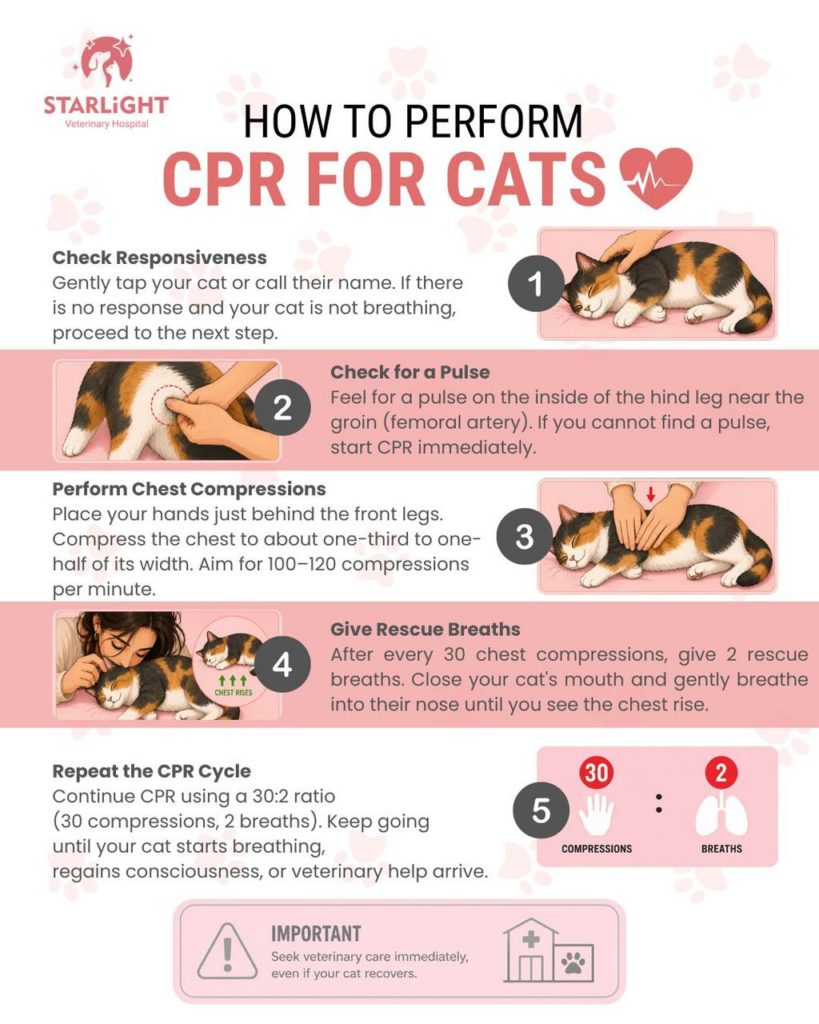
Place your cat on their side on a firm, flat surface. Either side is acceptable. Ensure the head and neck are gently extended to help keep the airway open.
Step 2: Begin Chest Compressions
Start chest compressions at a rate of 100–120 compressions per minute.
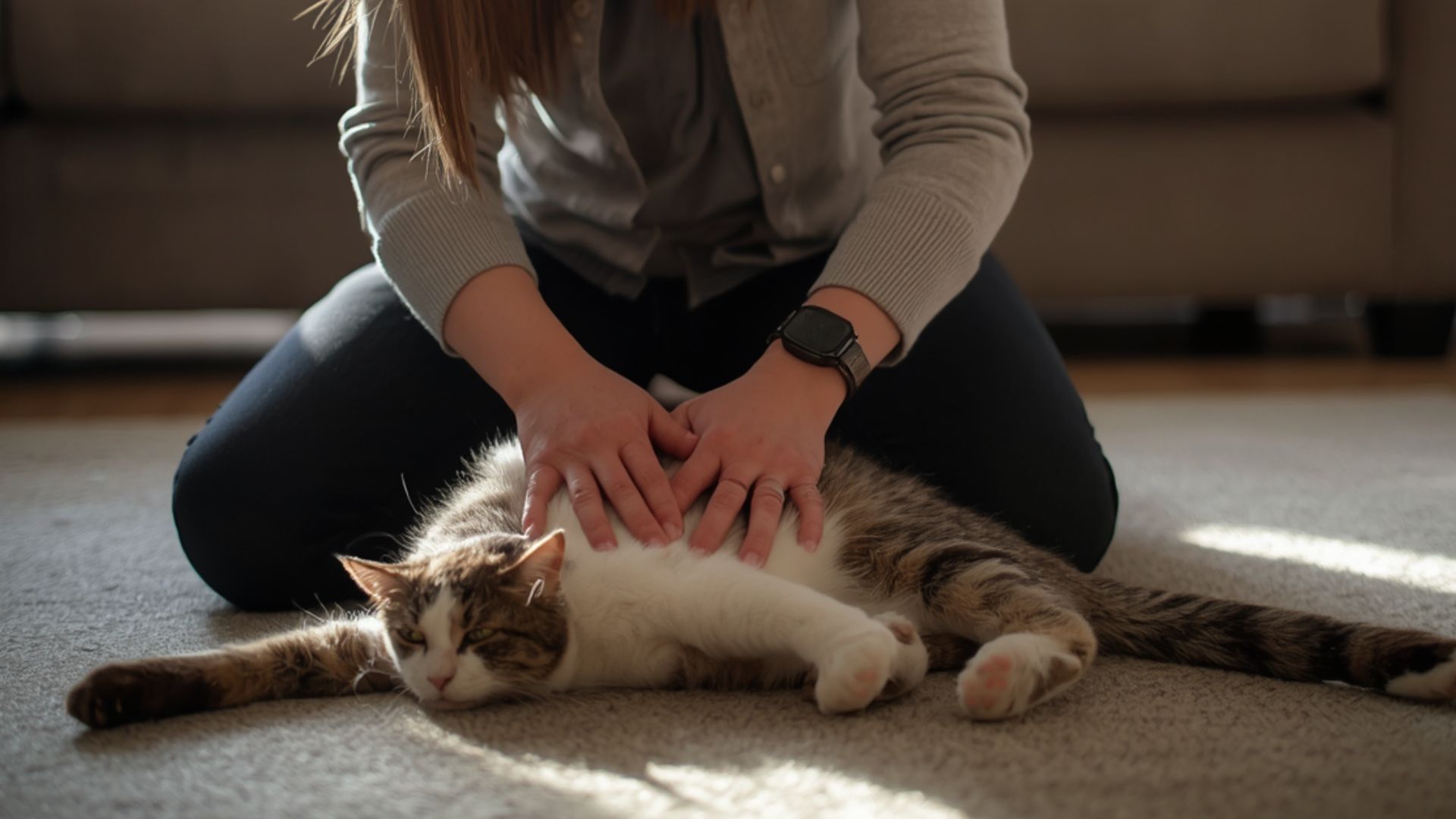
Place one hand around your cat’s chest, positioning your thumb over the area of the heart and your fingers on the opposite side of the chest. Compress the chest to approximately one-third to one-half of its width, allowing it to fully recoil between each compression.
Maintain a steady rhythm and continue compressions until it is time to deliver rescue breaths.
Step 3: Give Rescue Breaths
After every 30 chest compressions, give two rescue breaths.
Gently close your cat’s mouth and keep the neck extended. Place your mouth over your cat’s nose to create a seal and blow gently until you see the chest rise. Allow the chest to fall naturally before giving the second breath.
Once two breaths have been delivered, immediately resume chest compressions.
Step 4: Continue CPR
Continue the cycle of 30 chest compressions followed by 2 rescue breaths.
Repeat this pattern until your cat starts breathing, regains a heartbeat, becomes responsive, or veterinary professionals take over.
Step 5: Alternate Rescuers if Possible
CPR can be physically demanding. If another person is available and trained to assist, consider switching roles every two minutes to maintain effective chest compressions and reduce fatigue.
After Performing CPR: Seek Emergency Veterinary Care Immediately
CPR is only a temporary emergency measure and does not treat the underlying cause of your cat’s condition. Even if your cat starts breathing again or regains consciousness, they still require immediate veterinary attention.
After performing CPR, carefully transport your cat to a veterinary hospital as quickly as possible. Place them in a secure carrier with a stable, flat surface to minimise movement during transport.
At Starlight Veterinary Hospital, our Emergency and Critical Care team is equipped to manage life-threatening conditions with advanced monitoring, oxygen therapy, diagnostic imaging, blood testing, intensive care support, and 24-hour emergency services. These resources can help identify the cause of the emergency and provide the treatment your cat needs.
What Happens After a Cat CPR?
Cats that survive a cardiac or respiratory emergency often require intensive monitoring and supportive care. Depending on the underlying cause, treatment may include oxygen therapy, intravenous fluids, medications, diagnostic tests, or hospitalization in an intensive care unit (ICU).
The first 24 to 72 hours are often the most critical, as some cats may be at risk of further complications or recurrence. Close monitoring by a veterinary team can significantly improve the chances of recovery.
A Final Note for Cat Owners
Learning how to perform CPR on a cat is an important skill that every pet owner should know. In an emergency, recognising the signs of cardiac or respiratory arrest and acting quickly can make a crucial difference while help is on the way.
If your cat ever experiences a medical emergency, remember that CPR is intended to buy valuable time until professional veterinary care can be provided. Your quick actions may give your cat the best possible chance of survival.
If Your Cat Is Experiencing an Emergency
If your cat has collapsed, stopped breathing, suffered a serious injury, or requires CPR, seek veterinary attention immediately. In an emergency, do not delay treatment by waiting for an appointment.
Starlight Veterinary Hospital accepts emergency walk-in cases 24 hours a day. If possible, have someone contact the hospital while you are on the way so our team can prepare for your arrival.
While transporting your cat, keep them as comfortable and stable as possible. If CPR is required, continue performing CPR until you arrive at the hospital or until a veterinary professional can take over.
Remember, CPR is only a temporary life-saving measure. Immediate veterinary treatment is essential to diagnose and treat the underlying cause of the emergency.
FAQs
Yes, Cat CPR can be performed at home during an emergency if your cat is unconscious, not breathing, and has no detectable heartbeat. However, Cat CPR is only a temporary life-saving measure and should be followed by immediate veterinary care.
Your cat may need Cat CPR if they are unresponsive, not breathing, and have no heartbeat or pulse. Other warning signs include blue or pale gums, sudden collapse, and loss of consciousness.
Cat CPR can increase the chances of survival in certain emergencies by helping maintain blood circulation and oxygen delivery to vital organs. The sooner Cat CPR is started, the better the chances of a positive outcome.
Continue Cat CPR until your cat starts breathing on its own, regains a heartbeat, or veterinary professionals take over. If possible, have someone transport your cat to an emergency veterinary hospital while CPR is being performed.
Yes. Even if your cat appears to recover after Cat CPR, emergency veterinary attention is still necessary. The underlying cause of the cardiac or respiratory arrest must be diagnosed and treated to prevent recurrence.