


Neutering a Dog in Malaysia: The Right Age, the Recovery Timeline, and What to Expect Afterwards
Deciding when, or whether, to neuter a male dog is one of the most common questions we hear from dog owners in Ampang Jaya. The answer is rarely a single fixed age; it depends on your dog’s breed, size, and general health.
This guide walks through how our veterinarians approach the timing decision, what the day of the procedure actually involves, and what a typical recovery looks like, so you can plan with confidence.
What Does Neutering Actually Involve?
Neutering, medically known as castration, is the surgical removal of a male dog’s testicles under general anaesthetic. It is a routine procedure performed regularly in general practice, and most dogs go home the same day.
Beyond preventing unplanned litters, neutering is commonly associated with a reduced likelihood of certain roaming, marking, and mounting behaviours, and it removes the risk of testicular cancer later in life, along with lowering the risk of some prostate conditions.
Every dog is an individual, though, and your veterinarian is best placed to talk through the specific reasons that apply to your dog.
Choosing the Right Age
Why Age Depends on Breed and Size
There is no single correct age that applies to every dog. Smaller breeds tend to reach physical maturity earlier than larger and giant breeds, and growth plates close at different rates depending on size.
For larger breeds in particular, some veterinarians prefer to wait until a dog is closer to full skeletal maturity before neutering, since sex hormones play a role in bone growth and joint development.
Our veterinarians assess your individual dog, taking into account breed, size, and any orthopaedic risk factors, rather than applying a blanket age to every patient.
A Conversation, Not a Fixed Rule
Because the evidence around timing continues to evolve, and because individual dogs vary, we treat the neutering age decision as a conversation at your dog’s check-up rather than a form to fill in. Bring your questions, and expect your veterinarian to explain the reasoning behind whatever age range they recommend for your specific dog.
Preparing for the Procedure
The Pre-Surgical Check
Before surgery is scheduled, your dog receives a general health examination. Depending on age and health history, your veterinarian may recommend pre-anaesthetic blood tests to check organ function before proceeding, particularly for older dogs or those with any known health conditions.
You can read more about our approach to spay and neuter services and what is included in a typical visit.
Fasting Beforehand
As with any procedure under general anaesthetic, you will be given clear fasting instructions in the days before surgery, usually involving withholding food for a set number of hours beforehand while still allowing access to water up to a specified time.
Following these instructions closely helps reduce anaesthetic risk.
What Happens on Surgery Day
Your dog will be admitted in the morning, where the team will confirm fasting and answer any final questions. Once your dog is settled, a member of the veterinary team will place an intravenous line and administer pre-anaesthetic medication before general anaesthesia is induced.
The surgery itself is typically brief for most healthy adult dogs, and your dog is monitored closely throughout by trained veterinary staff, with vital signs checked continuously during the procedure.
After surgery, your dog moves to a quiet recovery space where the team watches closely as the anaesthetic wears off. Most dogs are ready to go home later the same day, once they are alert, comfortable, and able to walk steadily.
The Recovery Timeline
The First 24 to 48 Hours
Expect your dog to be a little groggy, quieter than usual, or less interested in food on the evening of surgery; this is a normal part of recovering from a general anaesthetic.
Offer a small, easily digestible meal that evening rather than a full portion, and make sure fresh water is available. A quiet, warm space away from other pets and boisterous play is best for the first day or two.
The First One to Two Weeks
Most dogs recover from routine neutering surgery within one to two weeks, though your veterinarian will give you a timeline specific to your dog. During this period:
- Keep walks short and on a lead; avoid running, jumping, and rough play with other dogs
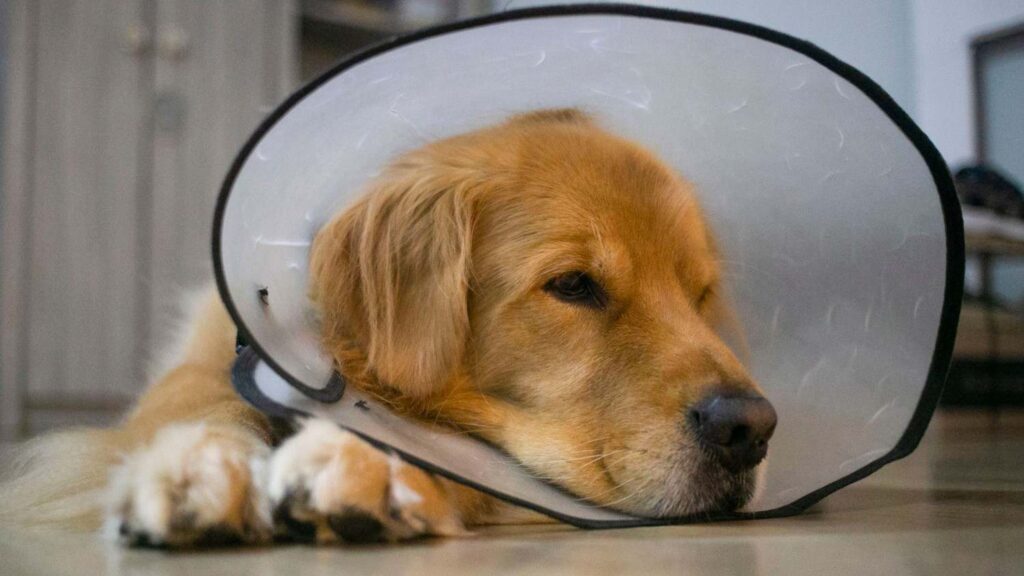
- Prevent your dog from licking or chewing at the surgical site; a protective collar or recovery suit may be provided
- Check the incision daily for any redness, swelling, or discharge
- Keep the area clean and dry, and avoid bathing until your veterinarian confirms it is safe to do so
When to Contact Your Veterinarian
Contact your veterinary team promptly if you notice swelling that is increasing rather than settling, discharge, a foul odour from the incision, ongoing lethargy, vomiting, loss of appetite lasting more than a day, or if your dog manages to remove any stitches or a protective collar.
Most recoveries are straightforward, but it is always better to check something minor than to wait on something that turns out to matter.
The Follow-Up Check
Most dogs are booked for a follow-up visit roughly ten to fourteen days after surgery so the veterinary team can check the incision has healed well and, if needed, remove any external sutures.
A Note on Behaviour and Long-Term Care
Neutering is often discussed alongside behaviour, but it is not a guaranteed fix for every behavioural issue; training, socialisation, and environment all play a significant role too.
Your veterinarian can talk through realistic expectations for your individual dog based on their age, temperament, and history. Alongside neutering, keeping up with routine veterinary care for vaccinations, dental health, and general wellness checks helps support your dog’s health well beyond the recovery period.
Frequently Asked Questions
Is neutering painful for my dog?
Your dog is under general anaesthetic during the surgery itself, so they will not feel the procedure. Some mild discomfort during recovery is normal, and your veterinarian will advise on appropriate pain relief as part of the aftercare plan.
How long does recovery take?
Most dogs recover from routine neutering within one to two weeks, though your veterinarian will give you a timeline tailored to your dog’s age, health, and the specifics of the procedure.
Can I walk my dog after neutering?
Short, lead-only walks are generally fine once your veterinarian confirms your dog is comfortable, but running, jumping, and rough play should be avoided until the incision has fully healed and you have been given the go-ahead.
Will neutering change my dog’s personality?
Neutering may reduce certain hormone-driven behaviours such as roaming or marking, but it does not change a dog’s core personality. Training, socialisation, and daily routine have a far greater influence on behaviour over time.
Does my dog need blood tests before the surgery?
This depends on your dog’s age and health history. Your veterinarian may recommend pre-anaesthetic blood tests, particularly for older dogs or those with existing health conditions, to check organ function before proceeding.
What if my dog licks or chews at the incision?
A protective collar or recovery suit is often provided for exactly this reason. If your dog manages to disturb the incision despite this, contact your veterinary team promptly so they can check that everything is healing as expected.